tel: +44 (0)20 8339 9112
Ditton Wine Traders (DWT)
DWT - making fine wine accessible
 

14 May 20125 tips for a successful En Primeur Campaign...

Ben Grosvenor

by Ben Grosvenor

Every year, merchants and buyers alike get excited about the prospect of En Primeur, even in lesser vintages – for merchants, an opportunity to go and try the new wines that the Chateaux have spent the past year working hard on producing, chatting to the owners about the vintage; its difficulties and challenges, and then trying to gain an understanding of it all.

For buyers, it’s an opportunity to listen to what their merchants have to say about the wines, and hopefully pick up some well-priced wines that won’t be ready for two years at least. Sadly, this year, despite the early pressure for a sensible and quick campaign, things seem to have taken a turn for the worse on this rainy Monday afternoon in London – and as such, we felt compelled to put together a short list on how we might run a Bordeaux campaign…

2011 En Primeur UGC tasting

• Cheap releases are the way forward, otherwise buyers will quit En Primeur altogether. People traditionally buy En Primeur because it is cheaper than buying the wines that are already available. There would be no point in buying something that is not available for two years, (and even once available cannot be drunk for another 5 at least) unless it is significantly cheaper than those wines that are available already with similar reviews.

• Release early, and get ahead of the game – if better wines are releasing before you, it is too late. Merchants will not offer wines if they come out at the same time as better wines, with similar prices. There has been ample time available for the Petit Chateaux to release in the previous four weeks – doing it on the same day as Lynch Bages makes no sense!

• Don’t all come out at the same time!! How can merchants keep buyers interested with an offer every minute!? Spread them out…

• Do not undermine those trying to sell your wines. Merchants do not like being told that the pricing structure is okay (Cos), when it clearly isn’t. Although Bordeaux have been making wine for a long time, the merchants have been selling it just as long – if they claim a price isn’t right, it probably isn’t.

• Don’t build the future price into current releases. If the price moves up in the future, so be it – it does so because it has age and provenance – if you want to do this, follow Latour’s example and quit En Primeur. If you would like people to buy something that hasn’t been made yet, make it worth their while.


Undoubtedly there will be good value on some of the better wines during this campaign, which we’ve already seen from Pontet Canet amongst others, and we will be sure to point these wines out as and when they are available. In the meantime, we’re working on a fantastic offer for some back vintages that have managed to escape Bordeaux and where pricing remains sensible for the quality of the wines – to follow shortly…

 Categories: InvestmentBordeauxEn primeurBlogs

18 April 2012Chateau Latour to stop selling En Primeur

Mark Schuringa

by Mark Schuringa

Chateau Latour, the illustrious Bordeaux 1st Growth, has announced that 2011 will be the last vintage to be released En Primeur.

This is big news, as for the first time since the 1960’s, a First Growth Chateau breaks with the unique and over time very successful way that Bordeaux sells its newest wines.

Why would Latour do this? What are the reasons behind this decision? What are the implications? Here are our thoughts.

First of all, being Fine Wine Merchants, this is a tricky subject. Our blog is widely read. By consumers, by fellow wine merchants, by the French Negociants and even by the Chateaux. Their interests are not always aligned and taking position could have repercussions on our ability to work with them. To illustrate that, it is very telling to see how few players in the market are willing to go on record.  However, Latour’s decision to stop selling its wine En Primeur is too big a thing to stay silent about and loyal readers and customers won’t be surprised to see that we tell it as we see it. Moreover, we side with the end consumer: if it’s right for the person who buys the wines we sell, it’s right for us and it should be right for all other actors in the distribution chain.

Chateau Latour | Ditton Wine Traders

Chateau Latour is owned by François Pinault, who runs the PPR retail empire. PPR, previously known as Pinault-Printemps-Redoute, owns luxury brands like Gucci, Yves St Laurent and Puma and additionally is involved in other luxury goods and sports brands. PPR is also involved in online retailing, in a wide variety of products. They have financial muscle and they understand retailing luxury goods. Moreover, PPR is a big corporate business. It’s fair to assume that the reasoning behind the move to quit the En Primeur system must be that Mr Pinault expects it to be better for PPR, ultimately maximizing its profits. Even though Latour say it’s all about selling their wine when it’s ready to drink and about “killing” speculation.


The En Primeur system

In its simplest form, the En Primeur system means that Chateaux sell wine from the barrel, years before it’s ready to be drunk and 2 years before it will be delivered to customers. It’s sold at a discount, in return for cash up front, which allows the Chateaux to finance the next crop. That was the original thinking behind the En Primeur concept.

However, if you have enough cash, why would you sell your wines En Primeur?

If Latour’s decision is indeed just about no longer selling En Primeur – which I’m not convinced about – what are the implications? Let’s look at the effect on price first. Let’s presume Latour decides to release 6 years after the harvest, instead of one year. Even though they might have enough cash to be able to do that, it doesn’t mean that cash is free. So, assuming the cost of money to be 5%, releasing 5 years later means costs have gone up 28%. Releasing after 5 years, at 28% more, wouldn’t make financial sense as the returns for Latour would be the same. Possibly even less because of the need for added storage facilities. Add to that the risk of price fluctuations and most likely – all other things being equal – Latour would have to price at 28% plus. Furthermore, they’d also want to receive a premium for holding the stock and controlling supply, because otherwise the whole exercise IMHO just doesn’t make sense.

How that translates into consumer prices remains to be seen. Perhaps it would do away with unsustainable, speculation fueled price hikes. Perhaps prices would stay the same as they are now. In either case though, the profits would be for Latour and not for the (speculating) consumer.

Moreover, the EP system is a bit more complicated then described above, as it has also morphed into an allocation system, effectively securing demand for the Chateaux. This has provided tremendous value to the Chateaux over the years, as they can “force” buyers into purchasing something they don’t necessarily want (for fear of not being able to get access to it in the years to come) whilst charging extremely high prices in the sought after vintages. This is particularly valuable when vintages are harder to sell and not something you do away with lightly. Therefore, Latour abandoning En Primeur makes people think there’s more going on than what is being communicated.


Is this just about quitting En Primeur?

For example, it could also spell the end for Latour selling through “le Place de Bordeaux”, with its allocation system, couldn’t it? Not necessarily so. It’s important to understand that Latour quitting EP doesn’t mean they will abandon selling through “le Place”. Indeed, Latour have communicated that they won’t. If that’s true, then Latour can still release stock into the market using “Le Place” and allocations, but would have achieved a higher return than before. This system could also exist for drinkable vintages only, provided there’s enough of an incentive for merchants that sell on the public.

Chateau Latour label | Ditton Wine Traders

So, all good then. Latour only wants their wine to hit the market when it’s ready to drink. They want to get rid of speculation and they will continue using the current distribution network.


The way Latour is distributed

Not quite. As mentioned, there is a strong sense that this is not just about quitting EP. Latour has been awkward with Negociants for a long time and has been courting big buyers directly. For years, they have released very little stock onto the market ( at high prices) and seem to have been preparing themselves to restructure the distribution of their wine. Many people expect the move to quit EP to be the start of a bigger plan. But again, the official communication does not support that.

Our guess is that Latour ultimately want to take charge of distribution, of the way its wines are sold, in order to maximize its profits. Ultimately, Chateau Latour would like to control the supply chain. Quite like some other luxury goods empires, who are very successful at it. Take for example LVMH, a rival of PPR and owner of Moet & Chandon and Hennessy Cognac. LVMH spends a lot of effort and money in controlling where their products are being sold. If for example prices in the UK are lower than in Japan, they will try and make sure that international traders don’t use the price gap to supply cheaper stock to Japan and in doing so potentially lower the price in Japan. LVMH want the price gap to remain and pocket the difference themselves. LVMH are very good at this.

Think of it, if you have a brand as strong as Latour, why would you let 3rd parties share in the profits if not necessary? You could do it all yourself. In fact, you are already doing it yourself, just not with this particular brand that you own. Why not cut out the courtiers (which would save 2%)? Why not cut out the Bordeaux Negociants (which would save 15 to 20%)? Why not cut out the International Wine Merchants (which would save another 10 to 15%) and go straight to their customers? Indeed, there are very persistent rumors that direct selling is already happening. Or even, why not cut them out as well and open your own retail stores?

But what about the bad vintages, critics might argue. How would Latour sell those if not through EP and “Le Place”? Could they get the same uptake, at the same price? It would be less forced, that’s for sure – which is a very good thing. It would be more consumer driven, which is good as well.  Yes, there would be a risk there for Latour, but if they can control supply and pricing, that risk surely is manageable. Particularly if Latour would throw some allocations to the Negociants, or big International Merchants, who would be starved for Latour. Or even discount it in their stores. After all, there would be a margin to play with.


Will others follow?

Already, there is massive speculation about what the other Chateaux will do. At the same time, it’s clear that, even if they wanted to abandon the EP system, only the biggest names could as smaller Chateaux simply don’t have the cash. But could this be viable for the bigger names? As stated above, you’d have to have the financial muscle to forego at least 5 years of cash flow. You’d also need to be reasonably sure that customers want to buy your wine without the added benefit of the traditional reasons (EP and secured allocations), now but also in the years to come.

Regarding the other, unconfirmed option of leaving “Le Place” altogether, that’s an even harder challenge, as you would need to be able to control distribution. There aren’t many Chateaux that tick those boxes.

Chateau Cheval Blanc new design


What does it mean if I just want to drink the stuff?

It will certainly improve provenance. It will probably mean Latour will be even harder to buy. Regarding price, that remains to be seen. Hopefully it will benefit drinkers, but our feeling is that if winemakers start to behave like the luxury goods empires that in some cases own them, it’s not in the interest of the end consumer. Surely increased control by the brand owner is not done just to protect the interest of the consumer.

Does this affect your decision to purchase Latour 2011 En Primeur? Clearly, you won’t buy it to safeguard future allocations, so the rationale to buy Latour will have to be that you love it and you like the opportunity to, for the last time, buy it now, En Primeur, years before you can drink it, because it works out cheaper.


Afterthought

Let’s hope we are being too cynical. Let’s hope this is just about what Latour communicates, which is that they would like to supply the market with the best Latour they can possibly make, ready to drink and with perfect provenance. 

 Categories: InvestmentBordeauxEn primeurBlogs

13 April 2012identifying value in back vintages

Ben Grosvenor

by Ben Grosvenor

"The cost of a premier grand cru like Chateau Lafite-Rothschild '82 is nearly $58/ bottle. The public simply won't pay this. I think that a crash is inevitable". Steven Spurrier, Time Magazine, 1985

The Lafite 1982 now sells at around £40,000/ case.

No matter what the current situation on the fine wine market is – there is one simple truth, and that is it is reasonable to assume that regardless of the fine wine market’s invariable day-to-day fluctuations, its prices will continue to move upwards.

As the prices move up, interest in buying wine as a commodity will also increase. As wine is a finite product that does get drunk – the value of high scoring wines will inevitably increase.

Smith Haut Lafitte 2009 price movement

The price movement on Smith Haut Lafitte 2009 after Parker awarded it 100 points – Courtesy FRW

As I have mentioned on previous occasions, prior to Robert Parkers re- ratings of the 2009’s, the cheapest 100 point red Bordeaux was the Pavie 2000 at around £4,000/ case. There are now several wines from the 2009 vintage with 100 points at significantly lower prices than this. These prices will not hold for long – and the same will apply to the 2010’s when they are re-rated later this year or early next.

Right now however, the market seems to have bottomed, and there are many good opportunities to buy before the Bordeaux 2011 campaign kicks off, as this campaign may push prices up further. 

Vieux Chateau Certan

Vieux Chateau Certan – one of the best wines of 2011?

We have put together a list from the 2000 vintage onwards showing all 1855 classified wines, the top wines of Graves, Pomerol and St Emilion, and key second wines too – along with their current average market price, and Parker scores – this list is incredibly useful in identifying those wines which represent great potential for investment, and those that look hugely undervalued in terms of drinking wines too.

Listed below are some of our tips from this list that still look a steal when considering their price/ vintage and score, along with a link to a selection of the full list (there is too much information for us to publish here, but if you would like more information on the full list, please download the list here or get in touch). If you compare these to different vintages of the same Chateau, or the same vintage and points of differing Châteaux, they look incredibly good value. So much so that it will not be long before consumers recognise the most obvious bargains and act!

This will be updated as the 2011’s are released – but expect market prices to move up on some of the highlights as listed below as the campaign moves on. We will be able to offer most of the wines from the full list, so please do ask if you have any interest.


2010

Lafite Rothschild

Haut Brion

Pontet Canet

Pichon Baron

Leoville Lascases

Lynch Bages

Eglise Clinet

Latour

Montrose

Brane Cantenac

d’Issan

Ducru Beaucaillou

Grand Puy Lacoste

Gruaud Larose

La Chapelle Ausone

La Lagune

Lafon Rochet

Larcis Ducasse

Lascombes

Latour a Pomerol

Le Bon Pasteur

Le Gay

Leoville Poyferre

l’Evangile

Malescot St Exupery

Saint Pierre

Smith Haut Lafitte


2009

Petit Haut Lafitte (2nd wine of Smith HL)

Clos Fourtet

Poyferre

Pontet Canet

Smith Haut Lafitte

Beausejour Becot

Beausejour Duffau Lagarosse

Branaire Ducru

Ducru Beaucaillou

Gruaud Larose

La Gaffeliere

Larcis Ducasse

Saint Pierre

Smith Haut Lafitte

Pavie


2008

Lynch Bages

Haut Bailly

Pichon Baron

Pontet Canet

Montrose

La Fleur Petrus

Pavie Macquin

Troplong

Trotanoy


Others to look at

Latour 2000

Latour 2003

Cos Estournel 2005

La Mission Haut Brion 2000

Leoville Las Cases 2000

Las Cases 2002

Malescot 2005

Margaux 2000

Montrose 2000

VCC 2006


Enjoy!

 Categories: InvestmentBordeauxEn primeurBlogs

8 April 2012After the Bordeaux 2011 tasting week

Mark Schuringa

by Mark Schuringa

After a short but very informative and useful trip, here are some of our observations regarding the new vintage and upcoming En Primeur campaign.

We have tasted lots of wines ourselves, we have been following tweets and blogs by other wine merchants and have read the reports published by wine reviewers and journalists. The conclusion is that 2011 is not a great vintage, although better than feared. It’s also a heterogeneous vintage, with some very good to exceptional but also rather poor wines. Selection therefore will be crucial this year. Whites and particularly Sauternes and Barsac however are exceptionally good in 2011 and represent a fantastic buying opportunity.

It must be said that the winemakers, in a lot of cases, have done a fantastic job in making very good wines when nature had not dealt them a good hand. It must be heart breaking for Chateau owners to work very hard for a year only for the international “critics” and merchants to show up and slack off their wine. The wine made in Bordeaux nowadays is invariably better than it was 15 years ago.

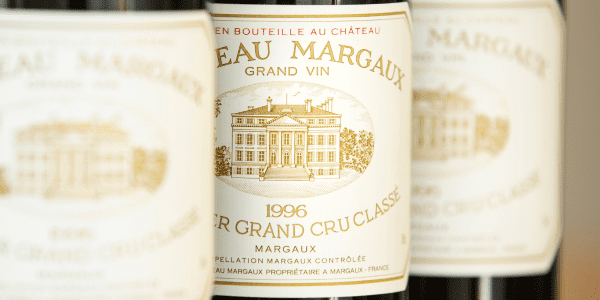
Speaking of the weather, there have been rather extreme conditions, with severe drought and very high temperatures in spring, hail and 2 days of 40 degrees in late June (see here for more detail). This has resulted in low yields, small berries and an early harvest. Chateau Margaux for example reported the lowest yields since 1991, the smallest berries ever (!) and the earliest harvest since 1893.

Chateau Margaux

Chateau Margaux

There is a plethora of vintage reports available online. Therefore, let it suffice for now to say that in a nutshell, the best appellations for Red seem to be St Julien and Pomerol with weather conditions most favorable for clay based Merlot. Whites and particularly Sauternes and Barsac are exceptionally good. The consensus seems to be that this vintage (for red) is of a quality comparable to 2001 and 2008, perhaps just behind them. To give you an idea of where that leaves 2011 in a ranking of all vintages since 2000, have a look at this:


Left Bank:  10,09,05,00,08,06,04,03,01,02,07

Right Bank:  10,09,00,05,08,01,06,04,07,03,02

Courtesy of Vinalytics, this ranking is derived at by taking aggregate scores from a spread of reviewers looking at approximately 250 Châteaux.


Seeing this is not a must-buy vintage (except for Whites and Stickies), pricing and the speed with which the En Primeur campaign is conducted will be all important to make 2011 sell. The Chateaux recognize this and promise price reductions and a quick campaign. Nevertheless, given pricing in recent history, Courtiers and Negociants are not convinced at all that Chateaux owners will reduce prices enough. Negociants and secondary trade are nervous about being forced into taking allocations that could ruin them if they can’t sell them through quickly enough. So far, 2011 has not attracted a lot of interest. Although reportedly, there were more badges issued by the UGC during the En Primeur week, reports from Chateaux and various attendants suggest there was considerably less interest, particularly from Asia.

Prices therefore need to come down severely to have a chance to sell this vintage. If they do, it might sell well as many very good wines have been made and the vintage does present an opportunity to get or increase your allocation of your favorite wines. If they don’t it will be a very disappointing campaign and a missed opportunity.

On our way to the fabulous Gruaud Larose party

On our way to the fabulous party at Gruaud Larose

So that leaves the question by how much need prices come down? The answer should be simple: prices need to be at a level where consumers can buy 2011 at a discount compared to similar and physically available vintages. We have already reported that for 3 of the 5 First Growths, this would mean they need to reduce their price by 57% as compared to 2010. The same calculations can be made for each wine, with reductions depending on the quality of their 2011, their pricing in 2010 as well as prices of comparable back vintages.

Will that happen? Let’s hope so because at the right price, there are some delicious wines out there well worth filling up your cellar with. So far the spread in prices I have heard is massive, ranging from €300 per bottle ex Negociant for Lafite Rothschild to no less than Sylvie Cazes (president of the UGC) saying that  10-15% down on 2010 should be enough.

Finally, there is a good chance the campaign will start very soon, possibly even next week. Most expect it to finish before Vinexpo at the end of May. And it might be kicked off by a First Growth. So get yourself ready! We will contact our subscribers and customers early next week to gauge interest. If you are not yet a customer, please get in touch. We have allocations for you and we are always very competitively priced.

We will be sharing our best buys as the campaign progresses. Make sure to check our blog for updates and do follow @DittonWineTrade on Twitter. It will allow you to stay on top of breaking news and releases, often before it's available anywhere else. Search (and use) #bdx11 to see who else is tweeting about Bordeaux 2011. Or just phone us if that's too geeky for you.

 Categories: InvestmentBordeauxEn primeurBlogs

28 March 2012At what price will Bordeaux 2011 sell?

Mark Schuringa

by Mark Schuringa

The Bordeaux 2011 En Primeur campaign will start shortly. Next week, the trade will go and taste the wines but this week, several wine critics have already done so. Robert Parker, who said on Twitter that he had no interest in the 2011 vintage before going out to Bordeaux, has also tasted the new vintage. On his blog, Parker said that "the 2011 is better than expected. It's close to both 2001 and 2008 in overall quality". Other tasters seem to confirm this.

There is also a lot of speculation on pricing. The consensus amongst consumers and trade is that prices will need to come down a lot in order for Bordeaux 2011 to have a chance of selling. The Chateaux agree that prices need to come down but at this stage won't be drawn into saying by how much.

The basic rule for En Primeur pricing is that it needs to be cheaper than comparable, physically available vintages. There has to be an incentive for consumers to buy something that they can't drink for a good few years. With that in mind, we make an attempt at establishing the price levels of the 2011 First Growths.

Below you'll find a table with the last 11 vintages of the 5 First Growths, their RP scores and current UK prices.

Comparison of First Growths

We then focus on 2001, 2002, 2004, 2007 and 2008 as being the vintages that will likely compare best with 2011. We have calculated the average price and average score for each of the First Growths, for those 5 vintages:

Bordeaux First Growths average score and price

We feel this "basket" of "average" vintages would be a fair proxy for 2011. Assuming that the consumer would be tempted to purchase 2011 if it comes at a 10% discount compared to the basket, we then have target consumer prices. Please see below. 

Bordeaux First Growth consumer prices

Finally, using normal margins for the trade, the Negociants and the Chateaux, we arrive at the release price for the 2011. Below, we have used the price ex Negociant, as this is the most widely quoted and comparable price. 

Bordeaux First Growths discount to 2010

So there we have it. If we have the consumer in mind – which we all should do and never not – prices need to come down by 57% for Mouton, Margaux and Latour and by 64% for Haut Brion. The only exception is Lafite, for which 8% would be enough. If you think 57% is a lot, then bear in mind that €260 a bottle is double the release price of the 2008.

You might also want to have a look at the Liv-ex blog, where you'll find a similar analysis although it arrives at different conclusions.

Make sure to follow our blog for updates and do follow @DittonWineTrade on Twitter. It will allow you to stay on top of breaking news and releases, often before it's available anywhere else. Search (and use) #bdx11 to see who else is tweeting about Bordeaux 2011. Or just phone us if that's too geeky for you.


 Categories: InvestmentBordeauxEn primeurBlogs

15 March 2012Denis Dubourdieu Bordeaux 2011 vintage report

Mark Schuringa

by Mark Schuringa

Denis Dubourdieu is a professor at the University of Bordeaux and a top oenologist. He is also a consultant, scientist, owner and wine maker of Doisy Daene and Clos Floridene. He is very well positioned to comment on the quality of  the 2011 Bordeaux vintage, or at least on the prevailing climatic conditions that largely dictate what the individual winemakers at the various Chateaux can work with.


Denis Dubourdieux


Courtesy of Pierre-Eric Sabatier of Cordier Mestrezat, one of the main Bordeaux Negociants, we are pleased to share with you Professor Dubourdieu's report on Bordeaux 2011. It is an exceptionally detailed report, across the regions, of all the major conditions that determine the quality of a vintage. 

Do read it and draw your own conclusions but in a nutshell, here are Denis' conclusions: "Astonishing dry white wines, less even quality for red wines than in 2009 or 2010, but many excellent and great Sauternes and Barsac" 

The UGC tastings are in just over 2 weeks and it is expected that the Bordeaux 2011 En Primeur campaign will kick off shortly after, possibly with the 1st Growths coming out first.

As of yet, there is not much buzz around this new vintage but that wil likely change. Having said that, Robert Parker will go out to Bordeaux next week to taste the barrel samples. If we have to believe his rather controversial, unprofessional and SHOUTING message on Twitter yesterday, he's not terribly excited: "HEADING BACK TO BORDEAUX NEXT WEEK TO TASTE 2011s-ABSOLUTELY NO INTEREST IN THIS VINTAGE IF MY instincts are correct". But let's not go there, that is a story in itself.

Make sure to follow our blog for updates and do follow @DittonWineTrade on Twitter. It will allow you to stay on top of breaking news and releases, often before it's available anywhere else. Search (and use) #bdx11 to see who else is tweeting about Bordeaux 2011. Or just phone us if that's too geeky for you.

Enjoy the report. 

 Categories: BordeauxBlogs

Problems with the site? Please let us know

© Ditton Wine Traders 2008-2012

site developed by Mark Iliff, Talespinner