tel: +44 (0)20 8339 9112
Ditton Wine Traders (DWT)
DWT - making fine wine accessible
 

December 2008

20 December 2008Credit and the future of the Fine Wine Trade

John Varley, the boss of Barclay’s Bank, has indicated that the availability of credit has to shrink. In an interview with the BBC, he says: "The amount of credit available is shrinking, it absolutely is, and that is a painful process, it’s a process through which the world absolutely has to go".

Quite right. In bankers terms, it’s called deleveraging and in a world where there’s no trust in financial assets (the basis for all loans), that has to be the way to go. If I apply for an overdraft, the bank will want to know – always has done - if I have enough assets to pay off my overdraft with should things go haywire. And if those assets decrease in value, which they have unless held in cash, the bank will want to decrease their exposure.

Obviously not good for business. Less credit = less demand = less orders = unemployment = less demand again =  and so on until the credit cycle stops and with apologies for oversimplifying.

What I’m intrigued about is the effect of this on Fine Wine prices. Yes, we have seen a severe slump in prices in the last 3 to 4 months. But is this due to the credit crunch and the the non-existence of credit availability? I don't think so. I think the main reason why prices have come down in the last few months is because traders found themselves with too much stock. Stock built up on the premise that prices would keep on increasing. When prices start falling and prospects are bleak, the pressure is on to sell as quick as you can. 

Once that process of "deleveraging" has ended however, it’s demand that will drive prices again. And demand for Fine Wine is and will be strong, certainly outstripping supply.

A bit of a bold statement? Think about this statistic. Two years ago, Chateau Lafite Rothschild could have sold their supply of en Primeur 50 times over. If demand drops by say 50%, they can still sell 25 times more than demand. Moreover, once these wines get drunk, there’s even less supply.

And that’s the fundamental reason why wine has proven to be a good investment, so much so that in the last 50 years, the average return has been 10% annually, easily outperforming the financial markets. Don't forget, this is not the first slump in Fine Wine prices, For example, the 1997 Asia Crisis saw prices decrease heavily, only to bounce back a couple of years later.

So, what does this mean? Well, with the risk of getting it totally wrong, here’s my prediction. These unprecedented times will lead to a shakeout of wine merchants. Only those with a strong customer base, with healthy access to cash and with a proposition to their customers that is compelling when the going gets tough, only those will do well. Poor delivery i.e you don’t do what you promise to do ? Forget it. Uncompetitive prices? There are loads of other merchants who are very happy to undercut you. You’re just acting as a middleman – not adding real value because you don’t have access to either the source of the wine or the end customer? Bit thin on the ground...

Varley then goes on to say "As soon as asset prices stabilise, then we will see the financial economy recover. And when will that occur? That will occur some time over the course of the next 18 months".

Hmmm. Too late for a few Wine Merchants certainly. For you as a potential wine buyer/investor, great. I reckon you have a window of between 6-12 months, starting now, to pick up trophy wines at a significantly reduced price, before the next upswing will start.

Now, I appreciate the above is all money talk. If you consider buying wine to drink it and can't be bothered with its value, life's much easier. At the moment, you can pick up top Bordeaux Cru Classe's at 70%-60% of the price of last summer. Interestingly, you can buy 2006 and 2007 Bordeaux below its En Primeur price and 1999/2001/2004 First Growths at around GBP 100 a bottle. Happy hunting!


12 December 20082008 En Primeur Campaign

The pressure mounts. The Bordeaux Chateaux owners and Negociants are always asked to keep their En Primeur prices down, particularly by the UK trade, so nothing new there. However, for the 2008 campaign, there are many more voices that advocate this point of view.

It started after the release of the 2007 en primeurs. Prices did come down, but not nearly enough to attract enough buyers. In fact, there is a very large pile of unsold stock sitting at the Chateaux, the Negociants and the Trade. This is being reflected in the prices these wines attract on the open market: in most cases less than the release price.

Then of course there was the global credit crunch and subsequent recession, which have seen prices of even the best vintages come down by 20%-30%, sometimes even more. Bearing in mind that 2008 is not exactly going to be a blockbuster vintage, you would think prices would have to come down significantly in order to make 2008 sell. On top of that, there is the massive decrease in the value of sterling, roughly 20% when compared to a year ago.

The UK trade is always very vocal in arguing that prices have to be reasonable. Since the UK Trade accounts for roughly 50% of En Primeur turnover, it's rather surprising that this opinion has been largely ignored by Bordeaux ever since 2005.

This might now change. On top of the above, compelling arguments to reduce prices, none less than J.F. Moueix – owner of Petrus and influential figure in Bordeaux – has said he thinks there might not be an En Primeur campaign if prices don't come down. He says "...the classified growths of Bordeaux have been in a dangerous speculative bubble since 2005, and price drops in subsequent vintages have been insufficient. The châteaux believe they are victims of the financial crisis, but they have orchestrated the problem of excessive pricing. If négociant houses can't buy or obtain lines of credit for their allocations, the wine will remain at the châteaux. And if there are not enough takers of allocations, there won't be any en primeur sales".

Coming from an influentual insider, will this change the stance of the Chateaux? For more detail on this story, see today's Decanter article.


9 December 2008Top Ten Investment Tips

Recently I was asked if Ditton Wine Traders "do" wine investment. The short answer was no, but we can give you some advice. When drafting the advice for this potential, first time investor in the fine wine market, I came to the conclusion that there are a lot of companies around that offer fancy brochures and services and undoubtedly do a very good job. The flipside of this is that you do pay for that. And in the end, you don't really need that. What you do need is some basic advice that will allow you to select the right wines and avoid some of the pitfalls. So I thought I'd share my top ten tips with you – in line with our motto  "making fine wine accessible".

1) The more stature the wine has, the better. As a rule of thumb, Robert Parker's rating is a good guide to that.

2) Stick with Bordeaux. They are more heavily traded than any other region and of all the top wines, these are still most in demand.

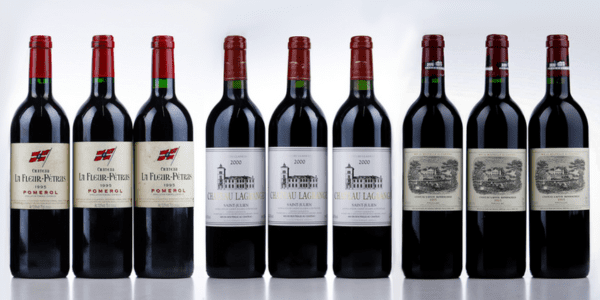
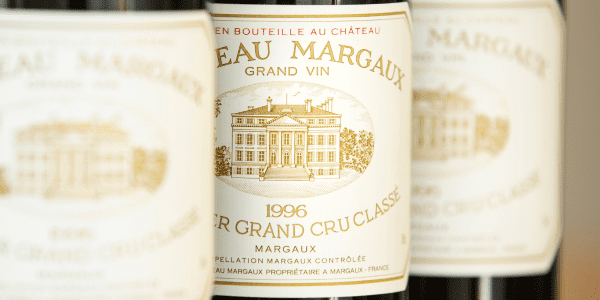
3) Within Bordeaux, there are really only 9 wines that truly merit the title investment wine. These are: Mouton Rothschild, Lafite Rothschild, Latour, Margaux, haut Brion, Ausone, Petrus, Cheval Blanc and La Mission Haut Brion.

4) Go for the best vintages: 1982, 1986, 1990, 1996, 2000, 2003, 2005. After stature of the wine, vintage is the most important driver of prices. Vintage acts rather like location in the housing market: when prices go down, those houses with the best location hold their prices best and only when people can’t afford these houses anymore do the next best houses go up in price (and are the first to go down).

5) If budget doesn’t allow for a combination of 3 and 4, stick with the best wines but trade down to slightly cheaper vintages that are relatively young: 1995, 1998, 2001, 2004, 2006.

6) Always make sure you buy original wooden cases (OWC) of 12 bottles of 75cl that are duty suspended (under bond), with impeccable provenance.

7) Make sure you have them professionally stored, in your own account.

8) Don’t pay for what you don’t need – most wine investment firms offer unnecessary services for which they charge steeply (at least in my view).

9) Make sure your investment horizon is a minimum of 5 years – although averaging a steady and healthy return of 10% yearly, wine prices can be volatile, just like the stock markets.

10) And finally, make sure you buy (and sell) cheap. Surprisingly, there are vast differences in price for the same wine, even between the London wine traders.

We could add a 11th criterium, which is timing. Obviously, when you buy in a trough you have a far better chance of making a good return than when buying in a booming market. Calling the bottom of the market is an impossible thing to do, although on this blog we do try and inform about market developments and occassionally vent our opinion on the right buying moments. I am positive that, in the long run, now is as good a time to buy as ever but at the same time, prices might go down further.

If you'd like to get some more advice, let us know. We would be more than happy to help.


3 December 2008Fine Wine Prices – latest news

Last Saturday, Christie’s held its first Hong Kong wine auction since 2001. After a series of disappointing results in recent auctions by other houses, it’s good to see that demand is still there. Christie’s fetched US $ 4m on a pre-sale estimate of US $ 3.2m with 94% of lots sold. That is a very encouraging result, no doubt helped by some very rare vintages of Latour, ex cellar, bought by Francois Pinault in 1993.

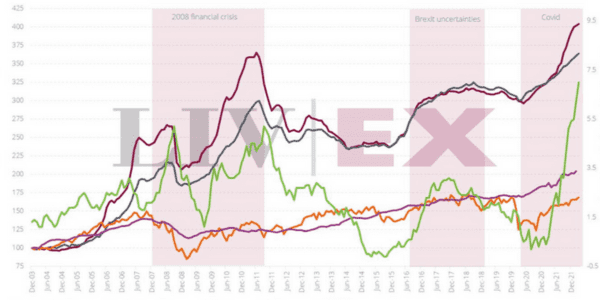
This news comes after Liv-ex released its November results, which saw the Liv-ex 100 decline by 5.5% compared to October. Year on year the index is down by 12.6%. To put this in perspective, the FTSE 100 is down by 34.9% year on year and the Nikkei even by 48.8%. 

This shows prices are still falling but there are signs that the decline is slowing down. Indeed, after 2 quiet weeks towards the end of November, volume of trade is very high again with several buyers that were sitting on their hands now snapping up trophy wines at what surely are bargain prices when you’re in it for the long run.

Happy hunting!


Problems with the site? Please let us know

© Ditton Wine Traders 2008-2012

site developed by Mark Iliff, Talespinner